In today’s digital landscape, organizations increasingly depend on robust technological frameworks to support rapid innovation, enhance customer experiences, and maintain a competitive edge. As businesses expand and user demands fluctuate, IT teams face the challenge of ensuring performance and reliability without incurring unnecessary costs or security risks.
Building an environment that can flex according to real-time requirements involves more than simply adding hardware or spinning up additional servers. It requires a strategic approach to system design, incorporating best practices such as microservices, containerization, and Infrastructure as Code (IaC). When components are decoupled and capable of independent deployment, IT teams can update, maintain, and scale each service without impacting others. This level of sophistication supports continuous delivery workflows and ensures that each layer of the stack can respond effectively to demand surges.
Throughout this article, we will explore the foundational concepts, integration strategies, automation techniques, security frameworks, and monitoring practices that underpin scalable IT solutions. Whether you are modernizing legacy systems or launching a new platform, understanding these elements is essential for constructing an infrastructure that thrives in today’s ever-changing digital world. Let’s dive into the key areas that will empower your organization to achieve resilience and sustained growth.
Defining Scalable IT Solutions and Core Architecture
Understanding Elastic Computing Models
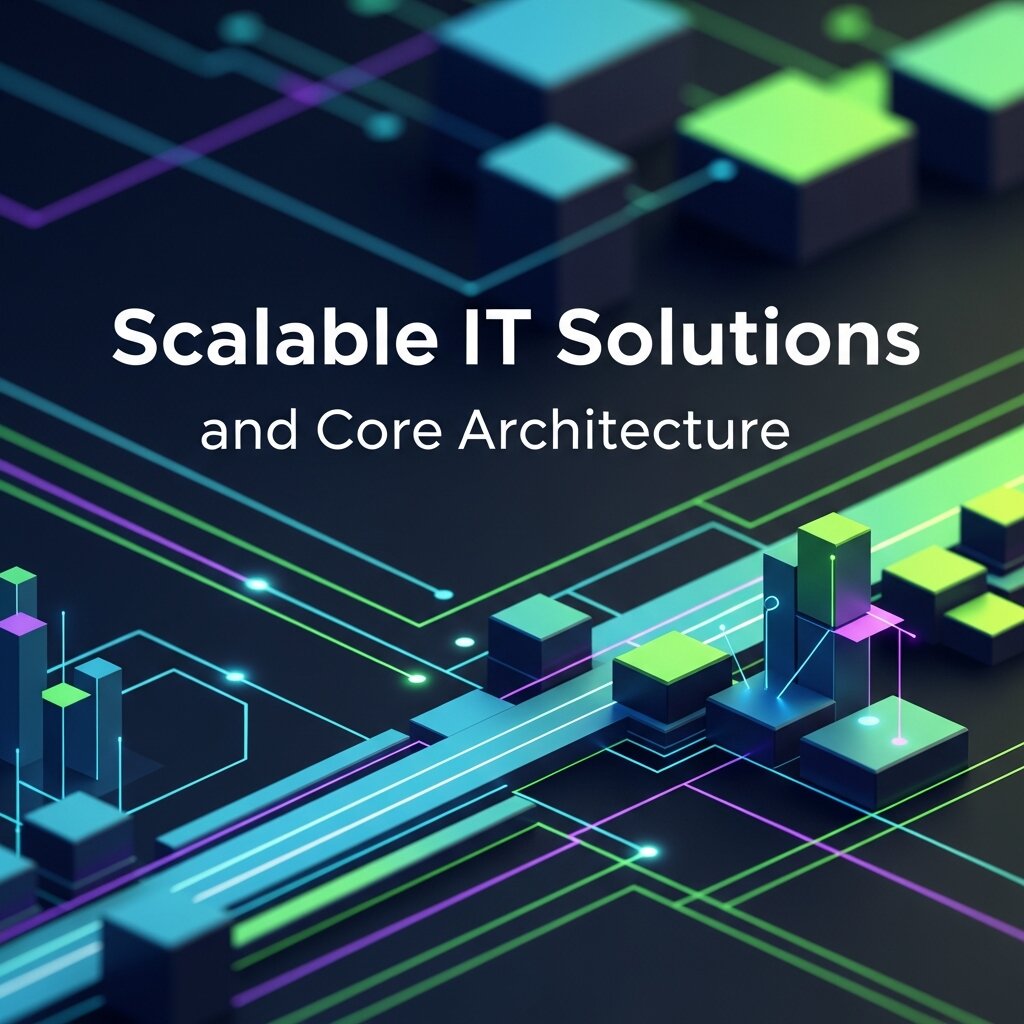
Scalable IT solutions refer to frameworks engineered to expand or contract based on workload requirements. Elasticity is achieved through two primary approaches: vertical scaling—enhancing resources on a single server by adding CPU, memory, or storage—and horizontal scaling—distributing workloads across multiple machines or containers. While vertical scaling provides quick capacity boosts, it can be constrained by hardware limits. In contrast, horizontal scaling harnesses distributed architecture patterns to deliver near-infinite flexibility. Cloud platforms like Amazon Web Services (AWS) and Microsoft Azure offer auto-scaling groups that monitor metrics such as CPU utilization and network throughput, automatically adjusting instance counts to meet demand. For more technical standards on performance and interoperability, organizations can refer to guidelines published by the National Institute of Standards and Technology (NIST) at.
Key Architectural Pillars
At the core of scalable architectures lie several fundamental design principles. Modularity ensures that applications are decomposed into microservices, each serving a distinct function and deployed independently. Containerization technologies like Docker encapsulate services in lightweight environments, enabling consistent behavior across development, testing, and production. Stateless service design further enhances horizontal scaling by storing session data externally in distributed caches such as Redis or Memcached. Infrastructure as Code (IaC) tools—Terraform, AWS CloudFormation, or Azure Resource Manager—codify configurations, making deployments repeatable and version-controlled. Event-driven architectures utilize message queuing systems like Apache Kafka to decouple producers and consumers, facilitating asynchronous processing and robust fault isolation.
Effective planning begins with workload analysis and predictive modeling. By leveraging data from monitoring solutions and business forecasts, IT teams can identify seasonal trends, user growth projections, and potential bottlenecks. This forecasting informs resource allocation, ensuring that applications maintain optimal performance without incurring unnecessary costs. Ultimately, the combination of elastic computing models and sound architectural principles lays the groundwork for a system that can grow seamlessly alongside your organization.
Integrating Cloud and On-Premises Environments
Hybrid Cloud Models for Flexibility
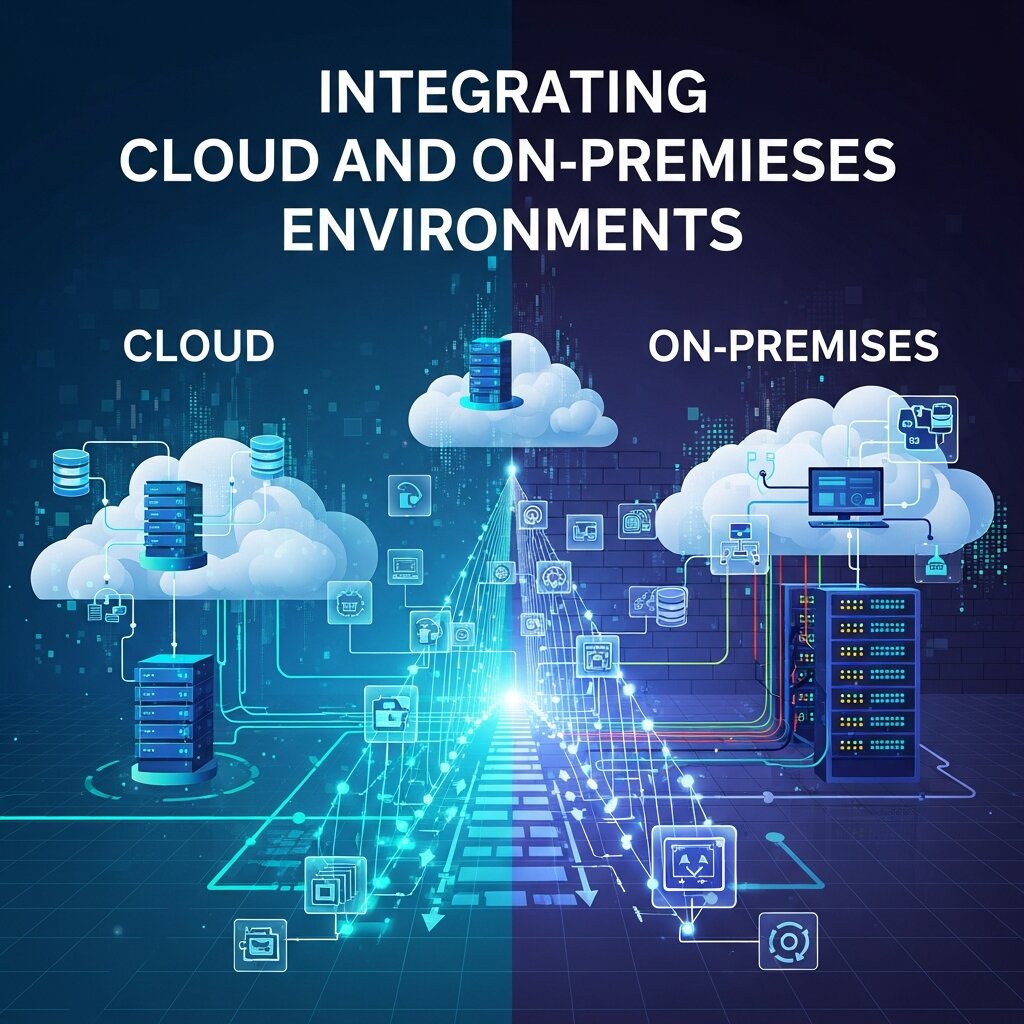
In today’s digital landscape, many enterprises adopt a hybrid cloud strategy to balance control, performance, and cost-efficiency. Hybrid cloud architectures allow sensitive workloads—such as those subject to strict compliance or low-latency requirements—to reside in private on-premises data centers, while less critical or bursty applications leverage public cloud resources. For instance, a financial services company might process day-to-day transactions on-site but shift end-of-day batch jobs to a public cloud provider. A multi-cloud approach extends this flexibility further by distributing workloads across multiple public cloud platforms to avoid vendor lock-in and optimize service-level agreements.
Secure Connectivity and Data Consistency
Achieving seamless integration between on-premises infrastructure and cloud environments demands robust networking and unified identity management. Virtual Private Network (VPN) tunnels, dedicated connections such as AWS Direct Connect or Azure ExpressRoute, and software-defined WAN (SD-WAN) solutions provide secure, high-performance links. Data consistency across environments is maintained through database replication and distributed file systems. For authoritative guidance on cloud security and best practices, the U.S. Cybersecurity and Infrastructure Security Agency (CISA) publishes resources at.
Container orchestration platforms like Kubernetes support both on-premises and cloud deployments, enabling a standardized management plane across diverse environments. Centralized monitoring dashboards consolidate metrics, logs, and traces, offering a holistic view of application health. Policy-as-code tools enforce governance by automatically auditing resources against corporate security and cost policies. When properly configured, hybrid and multi-cloud setups allow dynamic workload migration. Systems can automatically redirect traffic based on real-time performance or cost considerations, ensuring that applications remain responsive and cost-effective under varying loads. Governance, visibility, and centralized control are vital for maintaining compliance and operational consistency.
Automation and Orchestration for Efficient Growth
Infrastructure as Code and Declarative Frameworks
Automation is the cornerstone of scalable IT solutions. Manual provisioning of servers, networks, and services does not scale and is prone to human error. Infrastructure as Code (IaC) frameworks such as Terraform, Ansible, and AWS CloudFormation enable teams to define infrastructure declaratively. These tools transform configuration files into consistent, repeatable deployments, ensuring that environments can be spun up or torn down with minimal manual intervention. Version-controlling IaC scripts fosters collaboration, transparency, and auditability, key aspects of modern DevOps practices.
CI/CD Pipelines and Policy-Driven Workflows
Continuous Integration and Continuous Deployment (CI/CD) pipelines accelerate software delivery while reducing errors. Tools like Jenkins, GitLab CI/CD, and CircleCI automate build, test, and deployment stages, enabling teams to push changes to production multiple times per day. Integration with security scanners and compliance checks ensures that policies are enforced early in the development cycle. Container registries and artifact repositories store immutable images, allowing rollbacks and blue-green or canary deployments to mitigate risk.
Container orchestration platforms such as Kubernetes automate scheduling, scaling, and self-healing of containerized workloads. Horizontal Pod Autoscaling adjusts the number of running containers based on defined metrics, while custom operators can extend Kubernetes functionality to meet specialized requirements. Event-driven orchestration triggers automated workflows in response to specific events—like new code commits or performance threshold breaches—streamlining both routine operations and incident remediation. By combining declarative infrastructure with event-driven automation, organizations can focus on innovation rather than repetitive administrative tasks.
Securing Compliance in Expansive IT Landscapes
Implementing Zero Trust Security Models
As infrastructure grows, the attack surface expands. Adopting a Zero Trust security posture means that every request, user, and device must be authenticated, authorized, and continuously validated before access is granted. Identity and Access Management (IAM) solutions enforce least-privilege principles, ensuring that services and personnel can only access the resources necessary for their roles. Network microsegmentation—achieved through software-defined networking—isolates sensitive workloads, reducing lateral movement risks. Encrypted communication channels (TLS/SSL) protect data in transit, while robust key management services safeguard secrets and encryption keys at rest.
Regulatory Compliance and Automated Auditing
Organizations must adhere to industry-specific regulations such as GDPR, HIPAA, and PCI DSS. Automated compliance tools can scan configurations, identify deviations, and generate reports for auditors. Embedding compliance checks into CI/CD pipelines ensures that infrastructure changes are vetted against regulatory frameworks before deployment. Public sector and academic institutions, including those like Stanford University, offer best-practice research and guidelines for secure data handling.
Continuous monitoring platforms can detect anomalies in real time, triggering alerts or automated remediations when suspicious activity arises. Incident response plans, tested through regular tabletop exercises, ensure readiness when security events occur. By integrating security into every stage of the development and operations lifecycle, organizations can maintain a strong compliance posture even as they scale.
Observability and Performance Optimization
Implementing Comprehensive Monitoring
Observability is critical for understanding system behavior and driving informed scaling decisions. Collecting metrics (CPU, memory, I/O), logs, and distributed traces provides a multidimensional view into application performance. Open-source tools like Prometheus, Grafana, and the ELK Stack (Elasticsearch, Logstash, Kibana) enable real-time visualization and alerting. Commercial platforms such as Datadog and New Relic offer advanced analytics, anomaly detection, and machine-learning-driven insights. Defining Key Performance Indicators (KPIs)—including request latency, error rates, and throughput—allows teams to set alert thresholds that trigger horizontal scaling actions or notifications to on-call engineers.
Proactive Load Testing and Capacity Planning
Regular load testing using tools like Apache JMeter or Locust validates that applications can handle anticipated traffic peaks. Synthetic monitoring simulates user interactions, providing early warning of performance regressions. Distributed tracing solutions, such as Jaeger or OpenTelemetry, reconstruct transaction flows across microservices, pinpointing bottlenecks and latency spikes. Armed with this data, IT teams can optimize database shards, caching layers, or network configurations to improve user experience.
Predictive analytics, powered by machine-learning algorithms, can forecast demand patterns based on historical data and business trends. This empowers organizations to provision resources proactively, reducing the risk of under-provisioning during critical events. A culture of continuous observation and iterative optimization ensures that scalable IT solutions remain efficient, resilient, and aligned with user expectations.
AI-Driven Capacity Planning and Predictive Scaling
In modern scalable IT environments, relying solely on reactive scaling is no longer sufficient to meet the demands of unpredictable workloads. AI-driven capacity planning introduces a proactive approach where machine learning models analyze historical usage patterns, seasonal traffic trends, and real-time system telemetry to forecast future resource needs. By identifying correlations between user behavior, application performance, and infrastructure load, these systems can predict demand spikes before they occur. This enables IT teams to allocate compute, storage, and network resources in advance, reducing latency risks and avoiding service degradation during peak traffic periods. In 2026, many cloud-native platforms are embedding predictive analytics directly into their orchestration layers, allowing infrastructure to become increasingly self-optimizing.
Frequently Asked Questions
What is the difference between vertical and horizontal scaling?
Vertical scaling involves adding more resources—such as CPU, memory, or storage—to a single server, while horizontal scaling distributes workloads across multiple servers or containers, allowing the system to handle increased load by adding more nodes rather than beefing up existing hardware.
How do hybrid and multi-cloud strategies benefit businesses?
Hybrid and multi-cloud approaches offer flexibility by allowing sensitive or latency-sensitive workloads to remain on-premises or in private clouds, while bursty or non-critical workloads can leverage public cloud resources. This balances control, performance, and cost-efficiency and reduces vendor lock-in.
Why is Infrastructure as Code (IaC) essential for scalable environments?
IaC automates the provisioning and management of infrastructure through declarative configuration files. This ensures environments are consistent, repeatable, version-controlled, and less prone to human error, enabling rapid scaling and easier disaster recovery.
How does observability differ from traditional monitoring?
Traditional monitoring focuses on predefined metrics and alerts, whereas observability provides a holistic view by collecting metrics, logs, and traces. This multidimensional data enables deeper analysis of system behavior, root-cause identification, and proactive performance tuning.
Can legacy systems be made scalable?
Yes, legacy systems can be modernized using approaches like containerization, microservices migration, API integration, and hybrid cloud adoption. However, it often requires gradual refactoring rather than a complete replacement.
What industries benefit most from scalable IT solutions?
Industries like e-commerce, fintech, SaaS, streaming services, healthcare, and gaming benefit greatly because they experience fluctuating demand and require high availability and performance at scale.
What security considerations are important in scalable IT environments?
Key security practices include Zero Trust architecture, encryption, identity and access management (IAM), network segmentation, and continuous monitoring. These ensure that scaling does not introduce vulnerabilities or compliance risks.
Conclusion
Scalable IT solutions are an essential enabler for organizations aiming to thrive in today’s fast-paced digital environment. By embracing modular architectures, hybrid cloud strategies, automated orchestration, and robust security frameworks, businesses can build infrastructures that adapt in real time to workload fluctuations. Observability practices and proactive performance optimization further ensure that resources are used efficiently and that potential bottlenecks are addressed before they impact users.
Implementing a successful scalability strategy begins with clear objectives, comprehensive workload analysis, and a phased roadmap supported by Infrastructure as Code and DevOps principles. With the right combination of tools and processes, your IT landscape can flex with growth, maintain compliance, and support continuous innovation. As you plan for expansion this year (2026), invest in automation, monitoring, and security to transform scalability from a technical aspiration into a strategic advantage.
Read more about this topic: Future-Proof Your Business with Proactive IT Solutions