
In today’s digital landscape, organizations are under mounting pressure to balance technological growth with environmental responsibility. As enterprises expand their IT infrastructure, the carbon footprint of servers, data centers, and networking equipment continues to climb. Embracing sustainable IT solutions is a strategic imperative that not only mitigates greenhouse gas emissions but also enhances operational efficiency and drives cost savings. This comprehensive article explores how forward-thinking businesses can shrink their digital carbon footprint through targeted strategies in energy efficiency, resource management, and organizational culture.
This year (2026), stakeholders—from customers to regulators—demand greater transparency and accountability around environmental impacts. According to the U.S. Environmental Protection Agency (EPA), information and communication technologies contribute to roughly 2% to 3% of global CO₂ emissions. By quantifying current emissions, setting measurable targets, and leveraging best practices, IT leaders can transform their operations into a model of eco-friendly performance. Readers will discover step-by-step guidance on auditing energy use, optimizing infrastructure, integrating renewable energy, and fostering a green mindset across teams. Whether you are a CIO, sustainability officer, or IT manager, the strategies outlined here will empower you to align digital innovation with ecological stewardship and achieve long-term resilience.
Throughout this guide, the focus keyword sustainable IT solutions will be woven into actionable advice, ensuring that each recommendation aligns with modern SEO standards while offering real-world impact. By adopting these sustainable IT solutions, businesses can position themselves at the forefront of corporate responsibility and drive meaningful progress toward climate goals.
Understanding Your Digital Carbon Footprint
In order to implement effective sustainable IT solutions, the first step is to quantify the carbon generated by digital operations. A digital carbon footprint encompasses direct emissions from on-site servers and networking equipment, as well as indirect emissions tied to electricity generation, hardware manufacturing, and end-of-life disposal. By mapping energy flows and resource use, organizations gain visibility into hotspots where targeted interventions will yield the greatest impact.
Emissions can be categorized into three scopes: Scope 1 covers on-premise fuel combustion, Scope 2 includes purchased electricity, and Scope 3 covers upstream and downstream lifecycle emissions. Data centers, cloud services, and user devices all contribute to these scopes, making it essential to gather detailed consumption data and inventory information. Assessing both operational and embodied carbon provides a holistic view of environmental burden.
Key Metrics and Tools
Power Usage Effectiveness (PUE) remains a standard benchmark for data center efficiency, calculated by dividing total facility energy by IT load energy. A PUE closer to 1.0 indicates minimal overhead. Embodied carbon calculators, such as those offered by the National Renewable Energy Laboratory (NREL), allow teams to estimate emissions arising during hardware manufacturing and transport (https://www.nrel.gov). The U.S. Environmental Protection Agency (EPA) also publishes guidelines for greenhouse gas inventories and offers tools to model emissions across sectors (https://www.epa.gov/ghgemissions).
Conducting a Comprehensive Audit
A thorough audit starts with gathering utility bills, server utilization logs, and procurement records. Deploy monitoring agents or use cloud-native dashboards to track real-time energy consumption and performance metrics. Engage hardware vendors for lifecycle assessments, including details on raw material sourcing and end-of-life recyclability. Once data is consolidated, analyze trends to identify underutilized assets, overprovisioned capacity, and peak usage patterns.
With a clear baseline established, organizations can set SMART (specific, measurable, achievable, relevant, time-bound) goals for emission reductions. Documenting this process in an internal sustainability report builds accountability and prepares the organization for external disclosures, such as those required by the Global Reporting Initiative (GRI) or CDP.
Prioritizing Interventions
After mapping emissions, prioritize high-return areas such as old server clusters, inefficient cooling systems, or third-party services with high carbon intensity. Focus on quick wins—like consolidating idle servers or shifting workloads to regions with cleaner energy grids—to generate momentum. This approach ensures that initial investments in sustainable IT solutions deliver measurable returns, both financially and environmentally.
Energy-Efficient Infrastructure and Cloud Optimization

Designing infrastructure with energy efficiency in mind is at the core of sustainable IT solutions. Today’s data centers and cloud platforms offer a variety of techniques to reduce power consumption, streamline operations, and align resource usage with actual demand. By combining optimized physical facilities with advanced virtualization and intelligent cloud management, organizations can significantly shrink their digital carbon footprint while improving agility.
Optimizing Physical Facilities
Modern data centers benefit from innovations such as hot and cold aisle containment, liquid immersion cooling, and free cooling using outside air. These methods reduce reliance on traditional HVAC systems and enhance thermal management. Upgrading to high-efficiency uninterruptible power supplies (UPS) and power distribution units (PDUs) minimizes losses during voltage conversion. Additionally, retrofitting existing facilities with LED lighting and motion sensors cuts auxiliary energy use. Establishing PUE targets—ideally below 1.3—creates a benchmark for continual optimization.
Leverage Virtualization and Containers
Server virtualization consolidates multiple operating systems on a single physical host, eliminating idle hardware and lowering energy demands. Containerization further refines this approach by packaging applications and dependencies into lightweight, portable units that share the same OS kernel. Together, these technologies maximize utilization rates and simplify workload migration. Regularly analyze utilization metrics to decommission underused virtual machines and right-size resource allocations, ensuring that compute power matches real-world requirements.
Smart Cloud Strategies
Cloud platforms offer dynamic scaling capabilities that align resource allocation with workload intensity. Implementing autoscaling groups and serverless architectures means you pay only for active compute time, avoiding permanent overprovisioning. When selecting a cloud provider, review their sustainability commitments, renewable energy usage, and public environmental reports. Some vendors purchase carbon offsets or match customer workloads with green energy certificates. To further enhance efficiency, schedule batch processing and non-critical tasks during periods of lower grid carbon intensity, leveraging regional energy dashboards to time executions strategically.
Scaling Capacity with Modularity
Modular data hall designs allow incremental expansion aligned with workload growth, avoiding the inefficiencies of overbuilt facilities. Prefabricated modules can be deployed rapidly, each optimized for cooling, power distribution, and compute density. This “right-sizing” model reduces upfront capital expenditure and energy waste, as additional capacity is brought online only when demand warrants it. Modular strategies also support decommissioning unused units, further boosting overall energy efficiency.
Sustainable Hardware Management and Green Software Development
Combining hardware stewardship with eco-conscious coding practices is essential for comprehensive sustainable IT solutions. By extending the useful life of devices, selecting eco-labeled equipment, and crafting efficient software, organizations can reduce both embodied and operational carbon emissions. This holistic approach addresses the full IT lifecycle, from procurement through end-of-life.
Extending Hardware Lifecycles
Deploying asset management systems helps track device age, performance, and maintenance history, enabling strategic refurbishment and redeployment initiatives. Organizations that adopt Hardware as a Service (HaaS) models benefit from vendor-led upgrades and recycling programs, aligning incentives to keep equipment in use longer. Remanufacturing servers, storage arrays, and networking gear for secondary workloads curtails the need for new production, cutting raw material extraction and manufacturing emissions.
Responsible Disposal and Recycling
When hardware reaches its end-of-service life, partnering with certified e-waste recyclers ensures proper recovery of precious metals and safe handling of toxic components. Programs such as R2 (Responsible Recycling) and e-Stewards certify facilities that follow stringent environmental and social responsibility standards. Recovering materials like gold, copper, and rare earth elements reduces reliance on virgin resources and prevents harmful substances from entering landfills.
Green Software Practices
Software design has a direct impact on energy consumption across servers, network devices, and endpoints. Lean architecture principles—favoring microservices and serverless functions—allow individual components to scale independently. Profiling tools identify CPU-intensive routines, memory leaks, and I/O inefficiencies. Developers can optimize algorithms, employ caching strategies, and minimize network chatter by compressing data and batching requests. Integrating performance benchmarks into continuous integration pipelines ensures that incremental code changes do not degrade energy efficiency over time. By embedding sustainability metrics into DevOps workflows, teams foster a culture of continuous optimization.
Eco-Friendly Procurement
Opt for devices certified by Energy Star or EPEAT, which meet rigorous environmental performance criteria. Engaging suppliers for transparency on supply chain emissions and requiring eco-label compliance can tilt purchasing decisions toward greener alternatives. Bulk purchasing agreements often come with extended warranties and take-back programs, incentivizing vendors to design for modular upgrades and recyclability. Through strategic procurement policies, IT departments can influence manufacturers to adopt circular economy principles and reduce the overall environmental footprint of future hardware generations.
Monitoring Hardware Efficiency
Continuous monitoring of hardware energy performance is critical to uncovering inefficiencies before they escalate. Tools that track power draw, CPU utilization, and disk activity in real time enable proactive tuning. For instance, dynamically undervolting processors during low-demand periods or consolidating workloads on high-efficiency gear can yield measurable energy savings. Routine benchmark reports and automated alerts help IT teams identify aging or malfunctioning components that undermine performance and drive up carbon emissions.
Renewable Energy Integration and Remote Collaboration
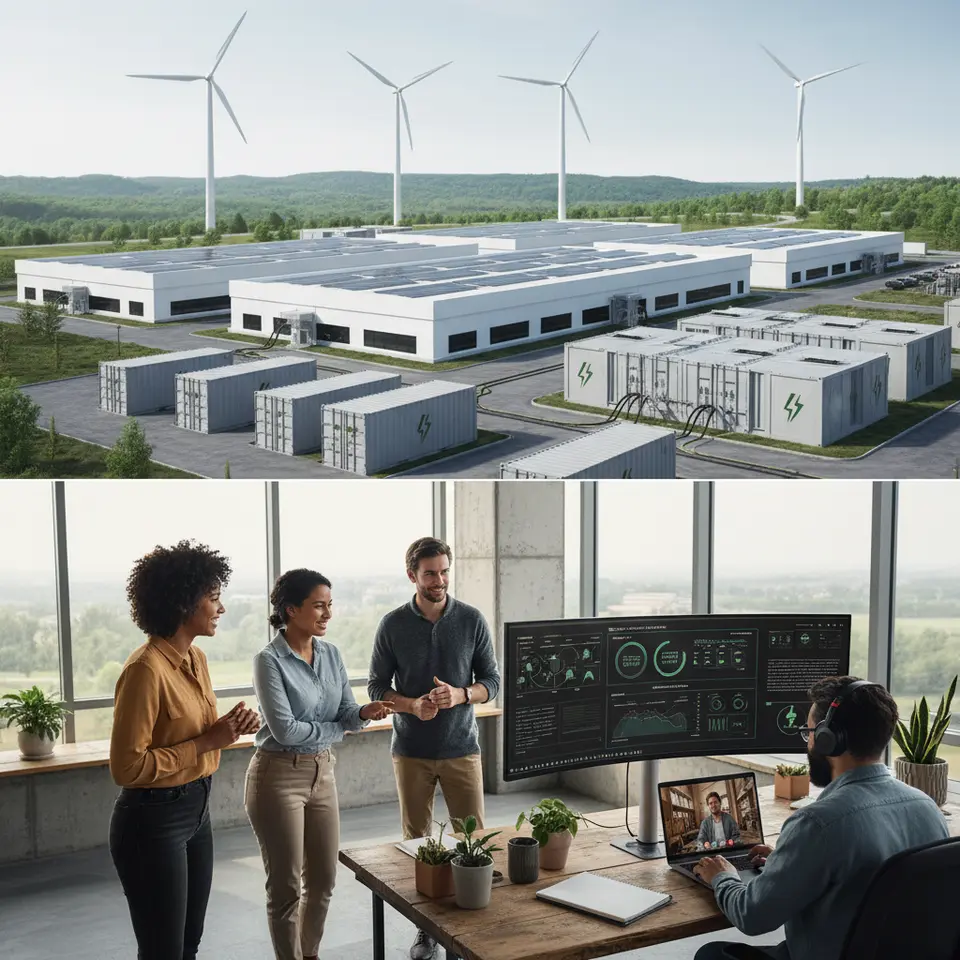
Transitioning IT infrastructure to renewable energy sources and championing remote collaboration are powerful levers for reducing digital carbon outputs. By aligning power consumption with green generation and minimizing travel-related emissions, organizations can amplify the benefits of other sustainable IT solutions. This integrated approach addresses both energy supply and demand, leading to a more resilient and low-carbon operations model.
Powering IT with Renewables
Negotiating power purchase agreements (PPAs) with wind, solar, or hydroelectric suppliers allows companies to match their electricity consumption with clean energy production. Data centers and office campuses can access renewable energy certificates (RECs) or virtual PPAs to virtually offset grid-based power. In regions with competitive energy markets, demand aggregation and green tariffs provide additional avenues for securing lower-carbon electricity rates. Such strategies can significantly lower Scope 2 emissions.
On-Site Generation and Storage
Installing solar panels on rooftops, parking structures, or adjacent land provides direct renewable supply for critical IT facilities. Pairing generation with battery storage systems smooths out intermittent output and offers backup power during grid disruptions. Microgrids that integrate solar, wind, and storage can operate autonomously, ensuring uninterrupted operations for latency-sensitive applications. In campuses and distributed branch environments, modular microgrid solutions enable incremental deployment aligned with sustainability budgets.
Enabling Remote Work Practices
Reducing commuting and business travel is a low-hanging fruit for shrinking organizational emissions. Implementing secure remote work policies, BYOD programs, and cloud-based virtual desktop infrastructures empowers employees to stay productive from home. This year (2026), many enterprises have refined collaboration guidelines to prioritize energy-efficient home office setups, such as power-saving modes on laptops and Energy Star–certified peripherals. Tracking travel-avoidance metrics in corporate sustainability reports highlights the impact of telework on carbon reduction.
Virtual Collaboration Tools
Adopting robust video conferencing, project management, and document-sharing platforms reduces reliance on in-person meetings and printed materials. Features like live captions, bandwidth optimization, and server-side recording enable smoother virtual experiences while using fewer resources. Encouraging asynchronous communication—through message boards and shared workspaces—avoids scheduled calls that may require participants to power multiple devices simultaneously. By embedding virtual collaboration into everyday workflows, teams maintain productivity while cutting travel-related emissions.
Demand Response Participation
Joining utility demand response programs enables organizations to shift non-critical workloads during periods of high grid strain or low renewable availability. Automated controls can migrate or throttle compute-intensive tasks in response to real-time price signals or grid frequency events. This flexibility not only supports grid reliability but also reduces energy expenses by capitalizing on lower-cost intervals. Clear reporting on demand response contributions further strengthens corporate sustainability disclosures.
Governance, Monitoring, and Organizational Engagement
Embedding sustainable IT solutions within corporate governance structures is essential for ensuring long-term success. In today’s competitive landscape, transparency, accountability, and stakeholder involvement drive meaningful progress. By defining clear policies, integrating cross-functional teams, and leveraging standardized reporting frameworks, organizations can maintain focus on carbon reduction targets and continuously refine their approaches.
Establishing Governance Frameworks
Begin by assembling a sustainability steering committee that includes representatives from IT, facilities, finance, and operations. Define roles, responsibilities, and decision-making processes to streamline green IT initiatives. Adopt recognized standards such as the Global Reporting Initiative (GRI) or the Carbon Disclosure Project (CDP) guidelines to align internal goals with external expectations. Embedding sustainability metrics into executive-level scorecards ensures that environmental objectives receive the same attention as financial and operational targets.
Clear policies on asset procurement, energy sourcing, and software standards guide consistent decision-making across global teams. Including sustainability clauses in vendor contracts ensures that supply chain partners uphold environmental commitments. Quarterly reviews of policy adherence help detect gaps early and keep initiatives on track.
Integrated Monitoring and Reporting
Implement unified dashboards that consolidate real-time data on energy consumption, carbon emissions, e-waste volumes, and renewable energy procurement. Tools such as the Green Grid’s metrics or cloud provider sustainability dashboards facilitate automated data collection and visualization. Regularly publish internal and external reports detailing progress against SMART goals. Transparency not only builds trust with stakeholders but also uncovers new opportunities for efficiency gains.
Continuous Improvement and Benchmarking
Establish a cadence of periodic audits and performance reviews to validate results and identify areas for refinement. Benchmark against industry peers using frameworks like the IT Industry Carbon Council or sustainability indices published by research institutions. Set stretch targets each year (2026) to maintain momentum and drive innovation. Encourage pilot projects that test emerging technologies—such as AI-driven energy management or blockchain-based supply chain tracking—and scale successful proofs of concept.
Employee Training and Incentives
Cultivating a culture of sustainability requires engaging employees at all levels. Offer interactive training sessions on green IT best practices, host hackathons focused on energy optimization, and provide resources for home-office efficiency. Recognize and reward teams that achieve notable carbon reductions or introduce breakthrough eco-friendly ideas. Gamified competitions, sustainability badges, and performance-linked bonuses reinforce positive behaviors and help embed green thinking into everyday decision-making.
Conclusion
Adopting sustainable IT solutions is no longer an optional exercise—it is an integral component of responsible business strategy in today’s digital landscape. By understanding your digital carbon footprint, optimizing infrastructure and cloud operations, managing hardware lifecycles, developing efficient software, and integrating renewable energy, organizations can achieve significant environmental and financial benefits. Coupled with robust governance, real-time monitoring, and a culture of continuous improvement, these efforts ensure that progress is measurable, transparent, and enduring.
As the global demand for computing power grows, so does the urgency to minimize its environmental impact. Implement the strategies outlined here to set ambitious yet achievable targets, engage your teams, and leverage authoritative frameworks for reporting and benchmarking. Start by conducting an audit, then prioritize high-impact areas and expand successful pilots. By embedding sustainability into every aspect of your IT roadmap and championing green practices across the enterprise, you will not only shrink your digital carbon footprint but also strengthen operational resilience and enhance brand value. The journey toward a low-carbon, high-performance IT environment begins today, and the choices made this year (2026) will shape the trajectory of your organization for years to come.
Together, these sustainable IT solutions pave the way for a more responsible and innovative future. Commit today to transforming your digital operations, and watch as efficiency gains, cost reductions, and positive social impact accelerate your competitive advantage in the marketplace.
FAQ
How does virtualization contribute to sustainable IT solutions?
Virtualization consolidates multiple workloads onto fewer physical servers, reducing energy consumption and hardware requirements. This improves resource utilization and lowers the carbon footprint of IT operations.
What is the significance of Power Usage Effectiveness (PUE) in data centers?
PUE measures the energy efficiency of a data center by comparing total facility energy to IT equipment energy. A lower PUE indicates less energy wasted on cooling and other overhead, making the facility more sustainable.
How can organizations extend the lifecycle of IT hardware?
Organizations can extend hardware lifecycles by refurbishing and redeploying devices, adopting Hardware as a Service (HaaS) models, and partnering with certified e-waste recyclers for responsible disposal and recycling.
What are the benefits of modular data center designs?
Modular data centers allow incremental expansion based on demand, reducing energy waste and upfront costs. They also enable efficient cooling, power distribution, and decommissioning of unused units.
How can renewable energy be integrated into IT operations?
Renewable energy can be integrated through power purchase agreements (PPAs), on-site solar or wind installations, and the use of renewable energy certificates (RECs) to offset grid-based electricity consumption.
What is the role of green software development in sustainability?
Green software development focuses on creating energy-efficient code by optimizing algorithms, reducing CPU-intensive processes, and minimizing data transfer. This reduces the energy consumption of applications and devices.
How can remote work practices reduce an organization’s carbon footprint?
Remote work reduces commuting and business travel, which significantly lowers emissions. Encouraging energy-efficient home office setups and using virtual collaboration tools further enhances sustainability.
What are demand response programs, and how do they support sustainability?
Demand response programs allow organizations to shift non-critical workloads during periods of high grid demand or low renewable availability. This supports grid stability and reduces energy costs.
Why is governance important for sustainable IT solutions?
Governance ensures accountability, sets clear sustainability policies, and aligns IT initiatives with corporate environmental goals. It also facilitates transparent reporting and continuous improvement.
How can employee engagement drive sustainable IT practices?
Engaging employees through training, incentives, and sustainability-focused initiatives fosters a culture of environmental responsibility. Recognizing contributions and hosting competitions can further motivate teams to adopt green practices.