
A single data breach can cost a company millions, halt operations for days, and erode customer trust that took years to build. Yet many businesses still treat security as an afterthought—something to address once a problem appears. By then, the damage is often done.
Network security solutions flip that reactive mindset on its head. Instead of scrambling to recover after an attack, businesses with strong security frameworks can absorb threats, adapt quickly, and keep running even when something goes wrong. That’s the essence of business resilience: the ability to bend without breaking.
This post explores how network security solutions support resilience across your entire operation. We’ll look at the role of server management, data center solutions, and computer networking, and show you practical ways to build a security posture that protects both your data and your bottom line.
What Are Network Security Solutions?
Network security solutions are the tools, technologies, and practices that protect your business network from unauthorized access, misuse, and attacks. They cover everything from firewalls and intrusion detection systems to encryption protocols and access controls.
Think of your network as the nervous system of your business. It carries sensitive data, connects your teams, and powers the applications you rely on every day. When that system is compromised, the effects ripple outward—lost productivity, financial penalties, and reputational harm.
A complete approach to network security doesn’t rely on a single product. It layers multiple defenses so that if one fails, others remain in place. This layered model is often called defense in depth, and it’s a cornerstone of modern cybersecurity strategy.
Why Business Resilience Depends on Strong Security
 Resilience is more than disaster recovery. It’s the capacity to anticipate threats, withstand disruptions, and bounce back faster than your competitors. Network security plays a central role in each of these stages.
Consider the financial stakes. Downtime caused by a cyberattack can grind operations to a halt, and for many businesses, even a few hours offline translates into significant lost revenue. Beyond the immediate costs, customers may take their business elsewhere if they feel their data isn’t safe.
Strong security reduces both the likelihood and the impact of these disruptions. When your defenses are solid, attacks are less likely to succeed. And when something does slip through, well-designed systems contain the threat before it spreads. That containment is what keeps a minor incident from becoming a full-blown crisis.
Protecting Against an Evolving Threat Landscape
Cyber threats aren’t static. Attackers constantly refine their methods, from phishing schemes to ransomware that locks up entire networks. A security solution that worked two years ago may leave gaps today.
This is why resilient businesses treat security as an ongoing process rather than a one-time purchase. Regular updates, continuous monitoring, and threat intelligence keep your defenses current. The goal is to stay one step ahead—or at least close enough to respond before real damage occurs.
The Role of Server Management in Network Security
Server management is one of the most overlooked pillars of a resilient security strategy. Your servers store critical data and run the applications that keep your business moving. If they’re poorly maintained, they become easy targets.
Effective server management involves keeping software patched, monitoring performance, and configuring systems to minimize vulnerabilities. An unpatched server is like an unlocked door—an open invitation for attackers looking for an easy way in.
Here are a few server management practices that directly strengthen security:
- Regular patching and updates: Vendors release patches to fix known vulnerabilities. Applying them promptly closes gaps before attackers can exploit them.
- Access control: Limiting who can access each server reduces the risk of both external breaches and internal misuse.
- Continuous monitoring: Watching server activity helps you spot unusual behavior early, often before it escalates into a serious incident.
- Automated backups: Frequent backups ensure that even if a server is compromised, you can restore operations quickly.
When server management is handled with care, your infrastructure becomes far more difficult to disrupt. That reliability is a key ingredient of business resilience.
How Data Center Solutions Support Resilience
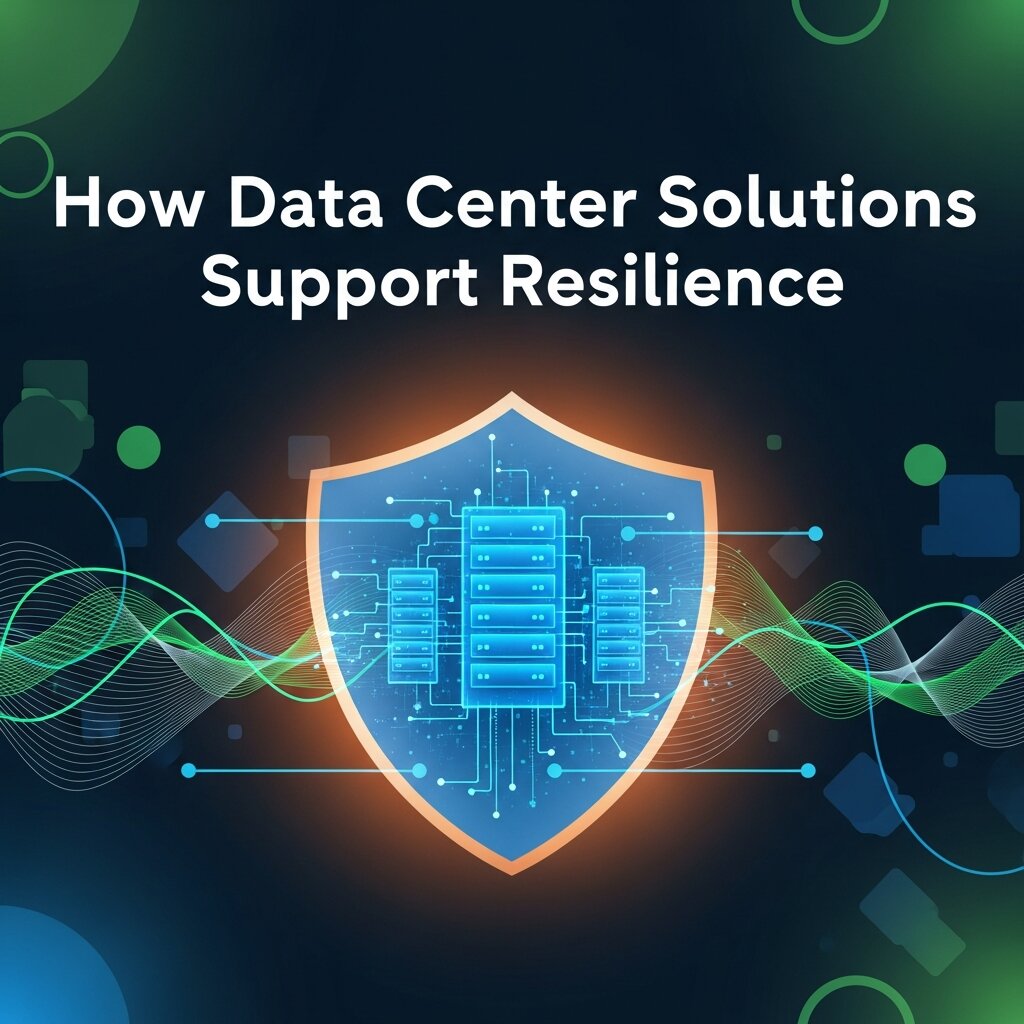 For businesses that depend on large volumes of data, data center solutions provide the foundation for both performance and protection. A well-designed data center isn’t just about storage—it’s about keeping information secure, available, and recoverable.
Modern data center solutions include physical security, redundant power supplies, climate control, and robust network defenses. Each layer contributes to uptime and protects against threats ranging from cyberattacks to natural disasters.
Redundancy and Disaster Recovery
Redundancy is the practice of duplicating critical components so that a single failure doesn’t bring everything down. In a resilient data center, power, cooling, and network connections all have backups ready to take over instantly.
Disaster recovery goes a step further. It involves planning for worst-case scenarios—fires, floods, or major breaches—and having systems in place to restore operations quickly. Many businesses now use geographically distributed data centers, so an event in one location doesn’t wipe out their entire operation.
Scalability and Security Working Together
As your business grows, your data needs grow with it. Scalable data center solutions let you expand capacity without compromising security. This matters because rapid growth often introduces new vulnerabilities if security can’t keep pace.
A thoughtful data center strategy builds security into every stage of expansion. New servers, applications, and connections are protected from day one, rather than bolted on later as an afterthought.
Computer Networking as the Backbone of Security
Computer networking ties everything together. It’s the framework that connects your servers, devices, and users, and it determines how data flows across your organization. A secure network design is fundamental to resilience.
Poorly configured networks create weak points that attackers love to exploit. Flat networks, where every device can reach every other device, allow a single compromised machine to spread malware across the entire system. Segmented networks, by contrast, contain threats by isolating different parts of the infrastructure.
Network Segmentation and Access Management
Network segmentation divides your network into smaller zones, each with its own security controls. If attackers breach one segment, they can’t easily move into others. This containment limits the blast radius of any single incident.
Access management complements segmentation by controlling who can reach what. The principle of least privilege—giving users only the access they truly need—reduces the chance that a compromised account leads to widespread damage.
Monitoring and Visibility
You can’t protect what you can’t see. Strong computer networking includes tools that give you visibility into traffic patterns, connected devices, and potential anomalies. When you understand what normal looks like, abnormal activity becomes much easier to spot.
Real-time monitoring lets your team respond to threats as they emerge rather than discovering them weeks later. That speed is critical—the faster you detect a problem, the less damage it can cause.
Building a Layered Security Strategy
No single tool or technique can guarantee complete protection. The most resilient businesses combine multiple network security solutions into a coordinated strategy. Each layer addresses different risks, and together they form a defense that’s far stronger than the sum of its parts.
A practical layered approach might include:
- Perimeter defenses like firewalls and intrusion prevention systems to block external threats.
- Endpoint protection to secure laptops, phones, and other devices that connect to your network.
- Encryption to keep data unreadable if it’s intercepted.
- Identity and access management to verify users and control permissions.
- Continuous monitoring and response to detect and contain incidents quickly.
The strength of this model lies in its depth. Even if attackers slip past one defense, they face several more before reaching anything valuable. That depth buys you time—and time is often the difference between a contained incident and a catastrophic breach.
Aligning Security with Business Goals
Security shouldn’t operate in a vacuum. The most effective network security solutions align with your broader business objectives. That means understanding which assets are most critical, where your biggest risks lie, and how much disruption your operation can tolerate.
Start by identifying your crown jewels—the data and systems that would hurt the most if compromised. Then prioritize your security investments accordingly. Not every asset needs the same level of protection, and spreading resources too thin can leave critical systems exposed.
It also helps to involve leadership in security planning. When executives understand that strong security directly supports business continuity and customer trust, security becomes a strategic priority rather than a line-item expense. That shift in mindset is often what separates resilient organizations from vulnerable ones.
Implementing Zero Trust Architecture in Modern Networks
Traditional network security assumes that everything inside the network is safe, but that assumption no longer holds in today’s threat landscape. Zero Trust Architecture (ZTA) removes this trust by default and instead verifies every user, device, and request before granting access.
In a Zero Trust model, identity becomes the new security perimeter. Every access attempt is continuously authenticated and authorized, regardless of whether it originates inside or outside the network. This drastically reduces the chances of lateral movement if an attacker gains initial access.
A strong Zero Trust implementation typically includes multi-factor authentication, strict identity and access management, micro-segmentation of networks, and continuous monitoring of user behavior. Together, these controls ensure that even if one layer is compromised, attackers cannot freely move through the system.
For businesses focused on resilience, Zero Trust adds a powerful reinforcement layer. It limits exposure, reduces breach impact, and ensures that trust is never assumed—only earned at every step.
Incident Response and Recovery Planning for Cyber Resilience
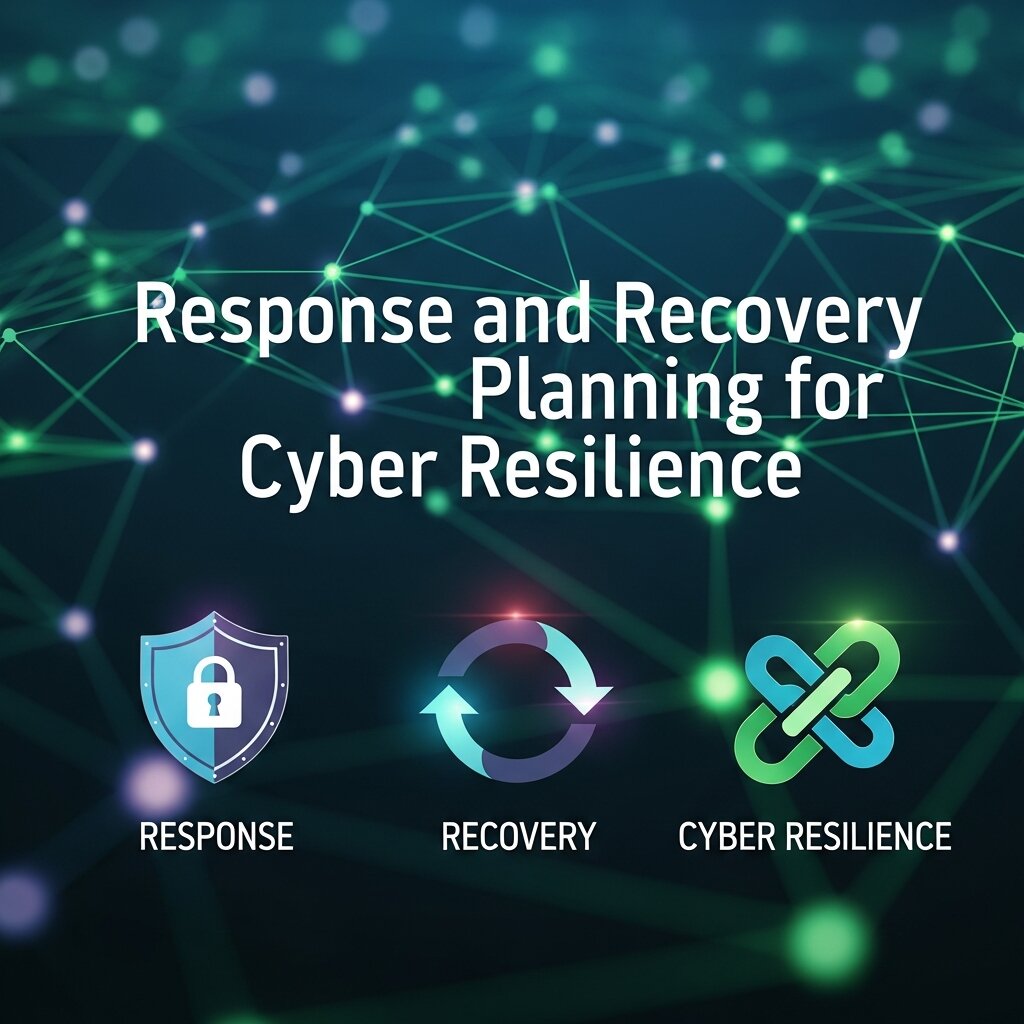 Even the most advanced network security solutions cannot guarantee complete immunity from attacks. That’s why incident response and recovery planning is essential for maintaining business continuity when something goes wrong.
An effective incident response plan defines exactly how an organization detects, contains, and eliminates security threats. It assigns clear roles to teams, establishes communication protocols, and ensures that decisions can be made quickly under pressure. Speed is critical—delays often allow attackers to escalate damage.
Recovery planning focuses on restoring systems and data after an incident. This includes verified backups, disaster recovery sites, and step-by-step restoration procedures that minimize downtime. Regular testing of these systems is just as important as building them, since untested plans often fail in real situations.
When combined with strong network security practices, incident response turns potential disasters into manageable disruptions. Instead of scrambling during a crisis, organizations can respond with structure, confidence, and control.
Turning Security Into a Competitive Advantage
Resilient businesses don’t just survive disruptions—they earn trust because of how they handle them. Customers, partners, and investors increasingly want to work with organizations that take security seriously. Demonstrating strong network security solutions can become a genuine differentiator in a crowded market.
The path forward starts with an honest assessment of your current posture. Audit your server management practices, evaluate your data center solutions, and review your computer networking setup for weak points. From there, build a layered strategy that addresses the gaps and grows with your business.
Investing in network security solutions isn’t just about preventing the worst-case scenario. It’s about creating a business that can adapt, recover, and keep delivering value no matter what comes its way. That’s resilience worth building—and the time to start is now, before a threat forces your hand.