Every organization relies on technology to keep operations running smoothly. When systems lag, employees lose productivity and customers quickly become frustrated. At the same time, cyber threats are growing more sophisticated, putting sensitive data at constant risk. Balancing the need for blazing-fast system performance with ironclad security is a primary challenge for business leaders.
Many companies try to solve these issues with quick fixes. They might buy a new software tool to speed up a specific process, or install a standalone antivirus program to protect a vulnerable server. However, these fragmented approaches often create more problems than they solve. A patchwork of mismatched technologies can actually slow down your network and leave dangerous gaps in your defense.
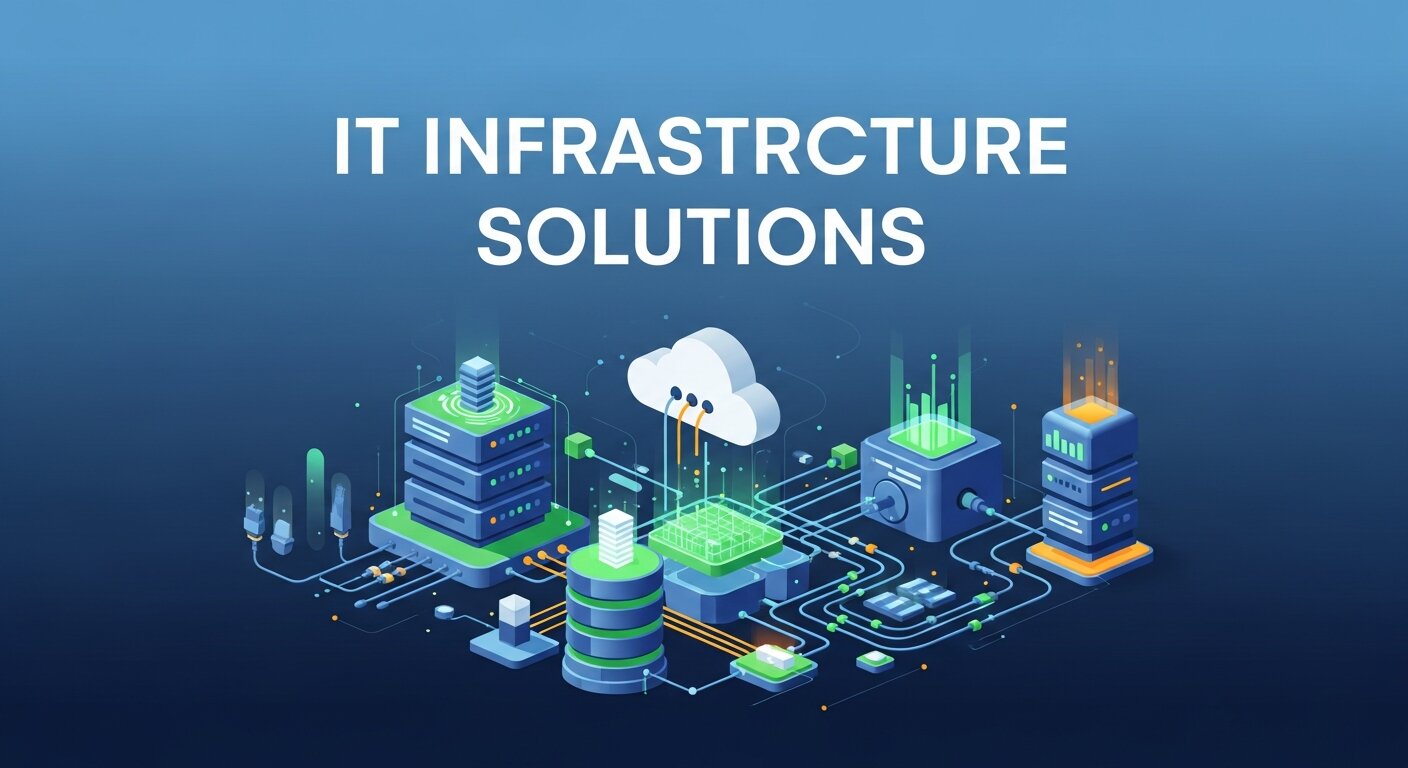
The most effective way to address both speed and safety is by looking at the foundation of your technological environment. Comprehensive IT infrastructure solutions provide a unified framework that supports all your business activities. By upgrading and integrating your core hardware, software, and network resources, you can build a system that is both resilient and highly efficient.
This post explores exactly how modernizing your technological foundation protects your digital assets while supercharging your daily operations. You will learn the specific mechanisms that keep data safe from unauthorized access, the architectural choices that eliminate frustrating downtime, and the steps your organization can take to build a stronger, more reliable network.
The Core of Modern Business Operations
 To understand how performance and security improve, we first need to define the foundational elements of a company’s technology stack. An organization’s infrastructure is the underlying framework that allows all digital tools to function. It includes the physical hardware sitting in server rooms, the networking equipment connecting devices, and the software applications managing data flow.
Historically, companies housed all this equipment on-premises. They purchased expensive servers, maintained them in climate-controlled rooms, and hired dedicated staff to keep them running. While this offered a high degree of physical control, it severely limited flexibility. Scaling up required buying new machines, waiting for delivery, and spending days configuring the hardware.
Now, the landscape has fundamentally shifted. Organizations are rapidly adopting IT cloud solutions to replace or augment their physical hardware. Cloud computing allows businesses to rent server space and computing power from massive, highly secure data centers. This shift transforms infrastructure from a rigid, physical asset into a flexible, scalable service. Whether a company uses a fully public cloud, a private cloud, or a hybrid model, this modern approach serves as the launchpad for massive improvements in both safety and speed.
How IT Infrastructure Solutions Enhance Security
Protecting a business from digital threats requires more than just a strong password policy. It demands a layered approach to security built directly into the network architecture. Modern IT infrastructure solutions weave protection into every level of your technological environment.
Advanced Threat Detection and Prevention
Older networks often act like a castle with a single strong gate but no interior guards. Once a threat bypasses the perimeter, it can move freely throughout the system. Up-to-date infrastructure changes this dynamic by implementing advanced threat detection directly within the network traffic flow.
Next-generation firewalls and intrusion prevention systems continuously scan incoming and outgoing data. They look for known malware signatures and monitor for unusual behavioral patterns. If a specific device suddenly attempts to download massive amounts of proprietary data, the infrastructure can automatically isolate that device before the data leaves the building.
Centralized Access Controls and Identity Management
One of the largest security vulnerabilities for any company is compromised employee credentials. Modern infrastructure setups prioritize centralized identity and access management. This means administrators can control exactly who has access to specific files and applications from a single dashboard.
These setups seamlessly integrate multi-factor authentication and role-based access control. Rather than trusting users simply because they logged in from a company laptop, the system continuously verifies their identity. This approach, often called Zero Trust, ensures that a marketing manager cannot accidentally (or maliciously) access sensitive human resources databases, significantly limiting the potential damage of a compromised account.
Automated Backup and Disaster Recovery
Ransomware attacks can paralyze an organization by encrypting essential files and demanding payment for their release. Robust IT infrastructure solutions offer built-in, automated backup and disaster recovery mechanisms to neutralize this threat.
Instead of relying on an employee to manually save files to an external drive at the end of the week, the infrastructure automatically backs up data to secure, off-site locations multiple times a day. If a ransomware attack occurs, the company does not need to pay a criminal. Administrators can simply wipe the infected servers and restore the entire system from a clean backup taken just hours before the attack.
Consistent Patch Management
Software vulnerabilities are essentially open windows for cybercriminals. Developers constantly release patches to close these windows, but applying these updates across hundreds of employee devices is a logistical nightmare for many IT teams.
By utilizing managed IT solutions, businesses can automate the patch management process. Updates are tested in a secure environment and then pushed out to all devices across the network simultaneously. This ensures the entire organization is protected against the latest known vulnerabilities without requiring manual intervention from staff.
Driving Peak Performance Through Modern Infrastructure
 Security keeps your business alive, but performance helps it grow. Sluggish applications and frequent network outages cost companies thousands of dollars in lost productivity. Upgrading your infrastructure directly addresses the root causes of these performance bottlenecks.
Unmatched Scalability for Growing Workloads
A growing business requires a growing technological footprint. When a company launches a highly successful marketing campaign, web traffic might spike dramatically. Traditional on-premise servers might crash under the unexpected load, resulting in lost sales and frustrated customers.
By integrating IT cloud solutions, businesses gain access to elastic scalability. The infrastructure automatically detects the increase in traffic and instantly allocates additional computing resources to handle the load. Once the traffic subsides, the resources scale back down. This ensures applications always run smoothly without requiring the company to pay for excess server capacity they only need a few days a year.
Reducing Latency and Network Congestion
Latency is the delay between a user clicking a button and the system responding. High latency makes applications feel sluggish and unresponsive. Modern infrastructure tackles this issue by optimizing how data travels across the network.
Techniques like edge computing process data closer to where it is generated, rather than sending it across the country to a central server. Additionally, advanced load balancers distribute network traffic evenly across multiple servers. This prevents any single machine from becoming overwhelmed, ensuring lightning-fast response times for end-users regardless of how many people are accessing the system.
Streamlined Application Integration
Businesses rely on dozens of different software applications to manage everything from accounting to customer relations. When these applications run on outdated, isolated infrastructure, getting them to communicate with one another is incredibly difficult. Employees end up wasting time manually entering the same data into three different programs.
Modern IT infrastructure solutions are designed with interoperability in mind. They utilize standardized application programming interfaces (APIs) that allow different software tools to share data seamlessly. This integration eliminates data silos, speeds up daily workflows, and allows leaders to pull comprehensive, real-time reports on company performance.
Proactive System Maintenance
Equipment failure is a major cause of unexpected downtime. Hard drives crash, switches short out, and servers overheat. In a reactive environment, the IT team only fixes these problems after the system goes down.
Partnering with a provider for managed IT solutions flips this model from reactive to proactive. These providers use sophisticated monitoring tools that track the health of your infrastructure 24/7. They can detect the warning signs of a failing hard drive weeks before it actually breaks. The component is then replaced during scheduled maintenance hours, completely avoiding any disruption to the business day.
The Synergy Between Security and Performance
 Historically, IT professionals believed they had to sacrifice performance to achieve high security. They assumed that adding complex encryption and heavy firewalls would inevitably slow down network traffic. Modern infrastructure proves this assumption wrong.
Today’s hardware is significantly more powerful, capable of running complex security algorithms without breaking a sweat. Furthermore, security and performance tools now share the same centralized dashboards and management consoles. When you optimize the network to run faster, you also gain better visibility into traffic patterns, making it easier to spot security anomalies. A clean, well-organized, and efficient network is inherently easier to defend than a cluttered, sluggish one.
By consolidating your tools into a unified infrastructure, you reduce software bloat. Removing conflicting, overlapping applications frees up processing power and RAM, immediately boosting system speed. At the same time, this consolidation reduces your attack surface, giving hackers fewer entry points to exploit.
Choosing the Right Setup for Your Organization
Every company has unique needs, regulatory requirements, and budgetary constraints. There is no universally perfect infrastructure setup. Building the right environment requires a careful assessment of your current operational bottlenecks.
Start by auditing your existing hardware and software. Identify which applications crash most frequently and which databases hold your most sensitive information. If your team works remotely, you might prioritize cloud-based collaboration tools and robust virtual private networks. If you process massive amounts of high-resolution video locally, you might need powerful on-premise servers connected via high-speed fiber optics.
For many organizations, the ideal path forward involves a hybrid approach. This might mean keeping highly sensitive customer data on a private, internal server while using public cloud platforms to host public-facing websites and employee email systems. Consulting with infrastructure experts can help map out a customized strategy that maximizes both speed and safety for your specific use case.
Frequently Asked Questions (FAQ)
What are IT infrastructure solutions?
IT infrastructure solutions refer to the hardware, software, networks, cloud systems, and security tools that support an organization’s technology operations. These solutions help businesses improve performance, strengthen cybersecurity, and ensure reliable daily operations.
Why are IT infrastructure solutions important for businesses?
Modern businesses rely heavily on technology for communication, data management, customer service, and productivity. Strong infrastructure solutions reduce downtime, improve system speed, protect sensitive information, and support long-term business growth.
How do IT infrastructure solutions improve cybersecurity?
IT infrastructure solutions improve cybersecurity through firewalls, intrusion detection systems, encryption, centralized access control, automated backups, and continuous monitoring. These layers of protection help prevent unauthorized access and minimize the impact of cyberattacks.
What is the role of cloud computing in IT infrastructure?
Cloud computing provides flexible and scalable computing resources over the internet. Businesses can store data, run applications, and manage workloads without relying entirely on physical servers. This improves scalability, accessibility, and operational efficiency.
What are managed IT solutions?
Managed IT solutions involve outsourcing technology management and support to specialized service providers. These providers monitor systems, handle maintenance, apply software updates, manage security, and resolve technical issues proactively.
Take the Next Step Toward a Resilient Network
Relying on outdated technology is a gamble that no organization can afford to take. Slow networks drain employee morale and damage customer relationships, while weak security protocols leave your most valuable assets exposed to digital predators.
Investing in robust IT infrastructure solutions is an investment in the longevity and agility of your business. By embracing scalable cloud resources, centralized security controls, and proactive management, you build a foundation capable of supporting your most ambitious goals. Take the time to evaluate your current technological environment today, and begin planning the upgrades that will secure your company’s future tomorrow.